












Vitamin D is vital for immunity, muscles and bone and teeth health. Dr Hilary Jones explains what vitamin D does in the body, who is at risk of deficiency and what you can do to keep your levels topped up.
🕒 4 min read
Why do you need vitamin D, and what does it do in the body?
Vitamin D is essential for regulating the absorption and distribution of calcium and phosphate in the body, and therefore has a vital role in keeping bones, teeth and muscles strong and healthy.
It's important for reducing the risk and consequences of falls and is needed for the immune system to work properly.
The sunshine vitamin
Sometimes known as the sunshine vitamin, vitamin D is mainly produced by direct action of sunlight on the skin, where it is converted from cholesterol.
Unfortunately, during the autumn and winter months in northern countries such as Ireland, the strength of UVB rays from the sun is insufficient for the skin to produce adequate levels. A rough rule is that if your shadow is taller than you are, you won't be producing enough vitamin D.
It's generally thought that between 10 and 15 minutes of exposure to the midday sun in the summer three times a week can provide enough vitamin D, but there are several factors that mean this is not always the case.

If your shadow is longer than you are tall, it's likely you're not producing enough vitamin D.
Who is most at risk of deficiency?
Many people are unable to get out and about because they are frail or housebound. Those living in care homes or other institutions are more vulnerable to vitamin D deficiency.
People who wear clothes that cover most of their skin are also at risk, as are those from African, Afro-Caribbean or South Asian backgrounds, as the pigment in their skin reduces vitamin D production.
Others who wear sunscreen or sun-blocking cosmetics, important at any time of year, are also at risk of deficiency for similar reasons. What's more, the further you are from the equator, the more UVB radiation from the sun is absorbed by the ozone layer.
Vitamin D deficiency symptoms
Lack of vitamin D can lead to bone deformities in children, as well as rickets. In adults the bone changes are known as osteomalacia. Adults may complain of a general sense of tiredness, with vague aches and pains along with an overall feeling of being unwell. Bones may feel tender under moderate pressure – often more noticeable in the ribs or shinbones.
Lack of vitamin D can also reduce immunity, so that individuals are more prone to frequent infections and colds. Some scientists believe that there is a correlation between the distance we live from the equator, lack of sunshine, lack of vitamin D and multiple sclerosis, which is more prevalent in northern geographical areas.
How many of us are deficient?
A report by the Food Safety Authority Ireland (FSAI) states that studies of vitamin D status in the country have shown that up to a quarter of teenagers and adults have 25-hydroxyvitamin D concentrations below 30nmol per litre – a level classed as deficient. It also states that the deficiency was more pronounced in the winter months.
How much vitamin D do we need a day?
Much depends on our baseline levels, but the current recommendation from the FSAI is that during the autumn and winter months, children aged one to four years should have 5µg (micrograms, sometimes written as mcg) per day, children aged five to 11 should have 10µg per day, and teenagers and adults should have 15µg per day.
This figure can also be expressed as international units, where 1µg = 40iu, so 15mcg = 600iu. This recommendation also covers breastfeeding and pregnant women.
The FSAI recommends that breastfed babies (under 12 months) who have less than 300ml of vitamin D-fortified formula a day should take an 5µg daily supplement.
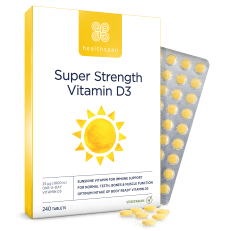
Super Strength Vitamin D3
For healthy bones, teeth, muscles and immunity
- 25 µg vitamin D per tablet
- Helps keep bones, teeth and muscles healthy, and supports immunity
- Multiple health benefits from one daily tablet
Getting vitamin D from your diet
Although some foods contain vitamin D, it's difficult to obtain enough purely from your diet. Foods rich in vitamin D include oily fish such as salmon, sardines, herring, mackerel and tuna. Other sources include red meat (pregnant women should avoid liver due to the vitamin A content), egg yolk, fortified spreads, and cereals.
This is why nutrition professionals and the FSAI recommend that adults take a daily 15µg vitamin D supplement in the autumn and winter.
In the past, cod liver oil was the supplement of choice for vitamin D, but not everyone gets on with the taste and aftertaste. Vitamin D tablets are a simple and cost-effective way to get your dose.
Safety factors when taking vitamin D supplements
There are certain precautions to bear in mind when taking vitamin D supplements. Anyone taking too much for too long could risk seeing a rise in calcium levels in their body (hypercalcaemia), resulting in weaker bones and potential damage to the heart and kidneys.
More than 100mcg (4000iu) a day could potentially be harmful, particularly if you have certain pre-existing medical conditions, so always ask your doctor before taking supplements.