












Bladder problems are common after giving birth. But you don't have to suffer in silence. Patsy Westcott explores the lifestyle changes and supplements that may help.
What bladder problems can occur after birth?
Stress incontinence
Urine leakage when you cough, sneeze, laugh, or exert yourself affects one in three women after having a baby.
...caused by
Weakness or damage to the nerves and tissues of the pelvic floor: the hammock of muscles and connective tissues that support your bladder, bowel and uterus, helping to control urination, the passage of wind and faeces, as well as contributing to your sex life.
Urge incontinence
A sudden, urgent need to pass urine (urgency), which may be followed by a leak. This affects one in four women after birth. Also known as overactive bladder (OAB), it can happen any time of day or night (nocturia).
...caused by
Uncontrolled bladder contractions due to irritation or loss of nerve control of the bladder muscles.
Mixed incontinence
A combination of stress and urge incontinence.
...caused by
A mixture of the factors described.
Urinary retention (being unable to empty all urine from your bladder)
This usually eases over the first couple of days following birth, but can persist for more than three days in one in 500 women. It can be caused by damage to the nerves serving the bladder. You may need a temporary catheter. Left untreated, urinary retention can cause muscle and nerve damage.
Urinary tract infection (UTI)
UTIs can cause loss of urination control. Symptoms include pain or burning on urination, urgency, increased frequency, abdominal pain, unpleasant-smelling urine, cloudy urine or blood in the urine, fever and malaise. Antibiotics and/or supplements such as cranberry are the usual treatment.
Who is most likely to experience problems?
You're most at risk if you've had a vaginal delivery, especially if you had forceps or ventouse, or sustained a severe tear during childbirth. Having a big baby (over 4kg) also increases the risk. Lifestyle factors such as a poor diet, smoking, constipation, being overweight, and caffeine and alcohol consumption can contribute to symptoms.
How can I help myself?
Post-birth bladder problems can get better on their own as your pelvic floor gets back to normal. However, they can last for years and contribute to pelvic floor disorders such as prolapse in later life.
Pelvic floor – or Kegel – exercises strengthen the muscles and prevent urine leakage. You can practise them anywhere, anytime without anyone knowing. There are also home devices and apps that can aid performance and monitor progress, although the jury is still out on their efficacy.
Common bladder problems in women

Find out about the most common bladder problems that can affect women, along with the best ways to manage them and improve your urinary health.
Read more
Natural solutions
Pumpkin seeds
With anti-inflammatory and antioxidant vitamins, minerals and phytonutrients, pumpkin seeds have traditionally been used to support bladder health. Extract of field pumpkin seeds, Curcubita peto, helps to maintain good bladder function and urinary flow, by helping the bladder muscles and sphincter muscle at the mouth of the bladder to work effectively to control urination.
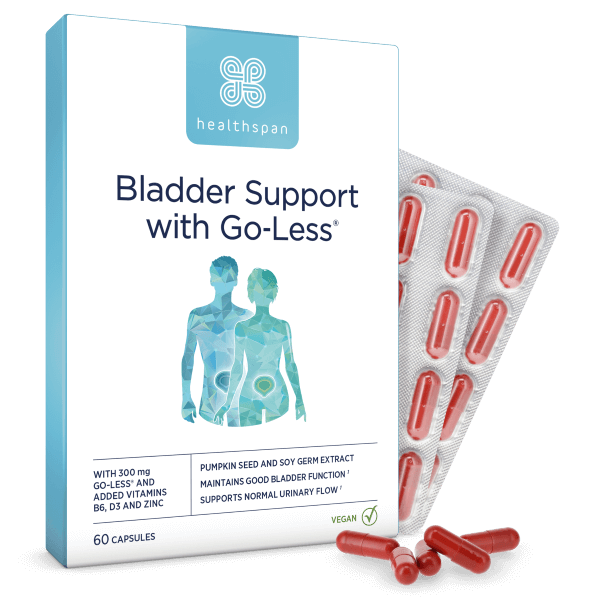
Bladder Support with Go-Less®
For good bladder health and urinary flow
- Contains 300mg Go-Less® pumpkin seed and soy germ extract
- Vitamins B6 and D3 for hormonal balance and muscle support
- Suitable for men and women
Soy
Soy contains isoflavones: plant compounds that are biologically similar to the hormone oestrogen, which plays a key role in maintaining the strength and elasticity of tissues of the bladder, vagina and pelvic floor.
A 2014 study of 120 women aged 35 to 70 years involved taking a combined supplement of pumpkin seeds Curcubita peto and soy germ extract daily for 12 weeks. The study found a significant decrease in symptoms of an overactive bladder.
Another study of a different product containing extracts of pumpkin seeds, horsetail and flax (Curcubita peto, Equisetum arvense and Linum usitatissimum), in 86 women aged 32-88 years suffering from stress incontinence, found a 30-35% improvement in incontinence and significant improvements in how often women urinated during the day and at night.
Vitamin D
Vitamin D is increasingly recognised as important for pelvic floor health. A 2010 study showed that average vitamin D levels were significantly lower in women reporting pelvic floor problems and urinary incontinence.
The risk of pelvic floor problems in women aged 20 plus was also lower with higher levels of vitamin D. A 2023 review of 13 studies, meanwhile, concluded that vitamin D deficiency increased the risk of overactive bladder and urinary incontinence, and that vitamin D supplementation reduced the risk.
Zinc
Recent research suggests that oxidative stress may be a factor in bladder and pelvic floor problems, and zinc may help combat this. Research is at an early stage, and more is needed.
Note: if you're breastfeeding or pregnant, consult your doctor before taking a supplement.
- Contract the pelvic floor muscles for ten seconds, hold for ten seconds, then relax for ten seconds. Repeat three times.
- Repeat three times using short fast contractions of one to two seconds.
- Do the whole sequence three times a day.
- Focus on the pelvic floor muscles without involving buttocks, abdomen or thighs.
- As your muscles strengthen, make the exercises part of daily life – practise when cleaning your teeth, cooking, driving the car or walking your baby in the pram.
- If you anticipate a leak, contract and hold your pelvic floor muscles.
- Keep at it – regular practice for at least three months is necessary for your muscles to regain strength.
Note: If problems persist see your doctor. Treatments may include physiotherapy, electrical stimulation, biofeedback, medications, collagen injections, pessaries and, in stubborn cases, surgery.