












Vitamin D is essential for immunity and helps to protect against respiratory infections. What's more, recent studies in Ireland have shown the importance of vitamin D supplementation for older adults during the COVID-19 pandemic.
We can only make vitamin D in our skin on exposure to sunlight when the UV index is greater than 3. As a result, vitamin D deficiency is increasingly likely during autumn and winter in northern latitudes. Even when the sun is shining, many people also fail to make enough vitamin D because they (sensibly) avoid the sun, cover up or use high-SPF sunscreens.
Research suggests that taking vitamin D supplements can reduce the risk of experiencing a respiratory infection, (including the common cold, influenza and pneumonia), especially in people with an existing vitamin D deficiency.
Vitamin D supplements and coronavirus
I have privately wondered whether people with more severe coronavirus symptoms might have an underlying vitamin D deficiency. Two studies from Ireland now provide some preliminary evidence to support this, and there are calls for hospital inpatients, nursing home residents, older people and those staying at home or cocooning to receive immediate vitamin D supplements.
There are even suggestions that vitamin D supplements may provide additional protection for frontline healthcare workers, certainly in Ireland where vitamin D deficiency is prevalent.
Another recent study looked at dietary intakes of vitamin D in 6115 adults using data from the UK National Diet and Nutrition Surveys. This showed that only vitamin D from supplements, rather than food, provided protection against respiratory complaints – most likely because it is difficult to obtain significant amounts of vitamin D from diet alone, unless you eat a lot of oily fish.
The authors noted that an estimated one in five of the UK population have low vitamin D levels and that almost one in three older adults aged 65 years and over do not achieve recommended vitamin D intakes.
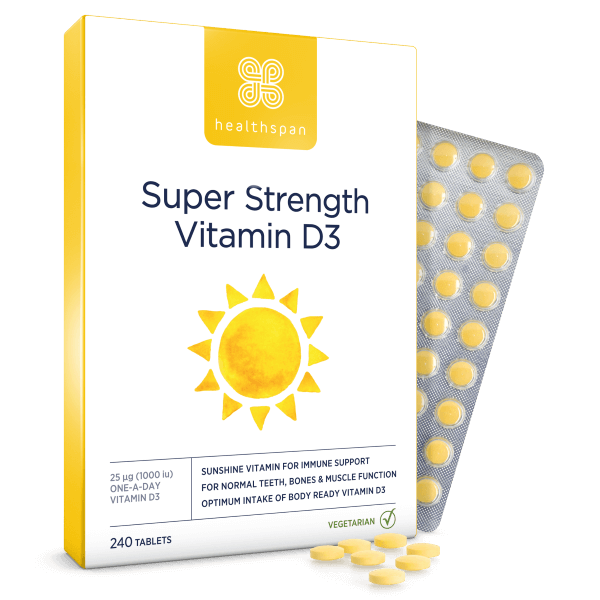
Super Strength Vitamin D3
For healthy bones, teeth, muscles and immunity
- 25mcg vitamin D per tablet
- Helps keep bones, teeth and muscles healthy, and supports immunity
- Multiple health benefits from €0.06 a day
Vitamin D and immunity
Our immune cells, including B and T lymphocytes, all carry specific vitamin D receptors that help to regulate their activity. Vitamin D helps to activate macrophages – our hunter-killer immune cells that engulf and destroy viruses and bacteria – and stimulates the production of antibiotic-like proteins (definsins) within the lining of the respiratory tract. Vitamin D also increases our production of natural antimicrobial factors.
During Victorian times respiratory infections were treated with cod liver oil and exposure to UV-rich sunlight, both of which are now known to help boost circulating levels of vitamin D.
Studies involving over 19,000 adults show that people with the lowest levels of vitamin D are 36% more likely develop a common cold than those with high levels, for example.
Other research shows that taking a vitamin D3 supplement can reduce the risk of experiencing a respiratory tract infection (including the common cold, influenza and pneumonia) by a third compared with placebo. The benefits are even greater in people with an existing vitamin D deficiency.
By protecting against the viruses that cause colds and bronchitis, vitamin D also helps to reduce the risk of a flare-up in people with asthma. Taking a vitamin D supplement can reduce the risk of a severe asthma attack that needs emergency treatment by as much as 61%.
In fact, the association between low vitamin D levels and respiratory infections is greatest in people with asthma (5.6-fold increased risk) or chronic obstructive pulmonary disease (2.2-fold increased risk).
Vitamin D deficiency and coronavirus
It has been suggested that one reason why a disproportionate number of people from BAME communities have experienced serious COVID-19 infections may relate to vitamin D status. This is because a higher level of melanin pigment in the skin reduces the ability to synthesise vitamin D on exposure to sunlight.
A Spanish study published in the Journal of Clinical Endocrinology and Metabolism assessed 216 people admitted to hospital with COVID-19 and found that 82% had a vitamin D deficiency, compared with 47% of the general population tested.
Taking vitamin D safely
Vitamin D is only found in useful amounts in oily fish, liver products, eggs, butter or fortified foods, and many people, in particular those following certain plant-based diets, don't consume these in sufficient quantities.
Older people may benefit from a higher dose, as the ability to make vitamin D in the skin at least halves between the ages of 20 to 80 years – often more. In one study, researchers found that people aged 62 to 80 years synthesised four times less natural vitamin D than those aged 20 to 30 years. I recommend 25mcg vitamin D for adults aged up to 50 years, and 50mcg per day thereafter.
Excess vitamin D can cause side effects due to disturbances in calcium metabolism such as headache, loss of appetite, nausea, vomiting, diarrhoea or constipation, palpitations and fatigue. An upper safe intake level of 100mcg per day (4000 IU) is therefore recommended by the EU.