











Cutting out dairy products is just one reason that you might be deficient in calcium – and there could be a number of effects on your health.
Why is calcium important?
Calcium is crucial for the development of strong bones and teeth, and is vital for muscle contraction and nerve function, plus blood clotting and cell signalling.
Your body requires a regular intake of calcium in order to function properly. If you don't get enough, your body takes existing calcium from your bones instead, which causes you to lose bone mass. Bone mass loss causes your bones to become porous and brittle, and puts you at higher risk of developing osteoporosis.
How much calcium do I need?
The European Food Safety Authority (EFSA) recommends that adults between the ages of 18 and 24 years consume 1,000mg calcium per day to maintain healthy bones, teeth and muscles; this drops to 950mg a day for those over 25.
There is also an EU statement that at least 1,200mg of calcium a day from all sources can help to reduce the loss of bone mineral in post-menopausal women.
According to the Health Service Executive, the safe upper limit for long-term use of calcium supplements is 1,500mg per day.1
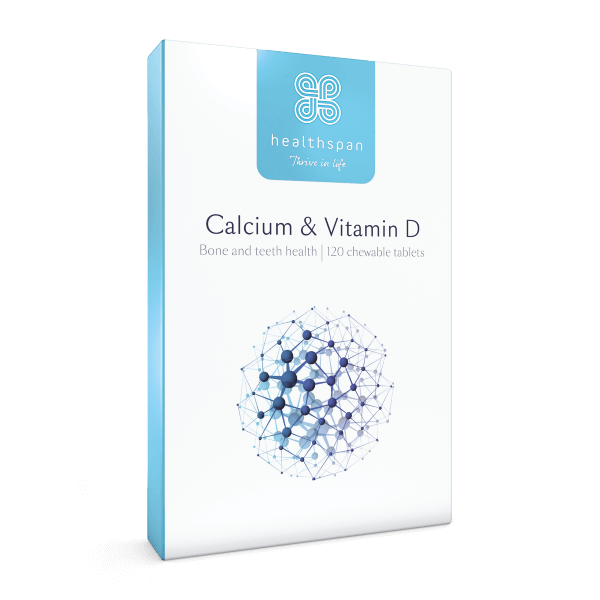
Calcium and Vitamin D
Chewable tablets for bone and teeth health
- Calcium and vitamin D to support teeth and bones
- Added vitamin K to help maintain bone health
- Helps reduce the loss of bone mineral linked to menopause
Calcium intake around the world
Research has revealed that in many parts of the world, low calcium intake may be putting the majority of us at an increased risk of osteoporosis and fractures.
According to new data published by the Osteoporosis Foundation, only Northern European countries are managing to consume a daily average of 1000mg.2
The top four European countries based on dietary calcium intake were as follows:
- Iceland - 1233mg/day
- Netherlands - 1102mg/day
- Germany - 1068mg/day
- UK - 994mg/day
"Outside of North America and most of Europe - particularly Northern Europe - there is lower intake than there should be for good bone health," said lead author of the study Ethan Balk, associate professor at Brown University School of Public Health.
"In many parts of the world, the low average calcium intake may be putting most people at increased risk of fractures and osteoporosis."
What are the best sources of calcium?
The top 10 sources of calcium are as follows:3
- Milk - 1 cup: 300mg
- Yogurt - 6oz: 300mg
- Kale (cooked) - 1 cup: 245mg
- Cheese - 1oz: 224mg
- Sardines (with bones) - 2 ounces: 217mg
- Broccoli - 1 ½ cup cooked: 93mg
- Watercress - 1 cup: 41mg
- Bok Choy - 1 cup: 74mg
- Okra - 1 cup: 82mg
- Almonds - 1oz: 76mg
Without doubt, the best source of calcium is milk, closely followed by other dairy products such as yoghurt, cheese and cream.
Is it true that milk is bad for you?
Milk is definitely not 'bad' for you, says nutritionist Rob Hobson. In fact, milk provides a whole host of nutrients, including:
- Calcium - for healthy bones and teeth
- Protein - to help build and repair muscle tissue
- Potassium - to help maintain healthy blood pressure
- Phosphorus - to help strengthen bones
- Vitamin D - for healthy bones and teeth
- Vitamin B12 - to help maintain healthy red blood cells and nerve tissue
- Vitamin A - to help maintain the immune system; helps maintain normal vision and skin
"While some people - such as vegans or those with a milk allergy or lactose intolerance - need to omit dairy foods from their diet, I would recommend that if you don't have any negative symptoms associated with eating dairy foods, (bloating, stomach upset, nausea) then there is no real reason to cut them out of your diet," says Rob Hobson.
"If you're worried about the quality of milk, go for organic, where animals are raised without the typical use of antibiotics and wormers and graze naturally on a GM-free diet (richer in omega 3)," he adds.
What milk alternatives are available?
If you have been diagnosed with a milk allergy, lactose intolerance or have made the decision to follow a vegan diet, it's especially important to find alternatives that provide enough of the nutrients you need to live a healthy life.
The following lactose-free milks and non-dairy milks are available:
- Coconut milk
- Almond milk
- Soya milk
- Oat milk
- Hemp milk
- Rice milk
- Hazelnut milk
"As far as the vital nutrients in dairy are concerned, then calcium, vitamin D and B12 are easy to find by choosing dairy-free milk alternatives that have been fortified," advises Rob. Alternatively, you may benefit from a calcium supplement.