













Aching joints can put a real dampener on daily life. Dr Trisha Macnair looks at some surprising causes and what you can do about them.
Arthritis affects just under one million people in Ireland.1 And although some of the things that trigger the accompanying pain are easy to pinpoint, there are others that might surprise you.
Did you know that every part of a joint is living tissue? Because of this, our joint health can be affected by a huge range of events going on inside and outside the body.
We also perceive joint pain differently. It's not unusual, for example, to see some sufferers with severe joint destruction suffering remarkably low pain, while others, who have minimal joint changes, are left in agony.
So, if you are plagued by aching joints, remember: it might not reflect the degree of joint damage. Read on to find out the possible causes of your aching joints and what you can do about them. For persistent pains, also speak to your GP.
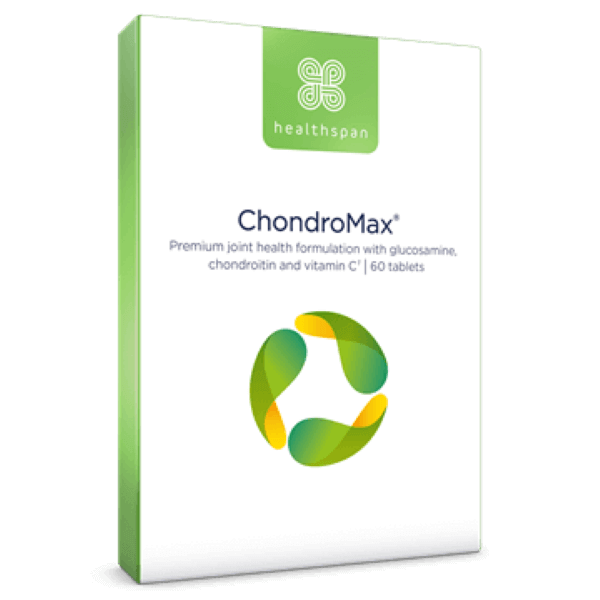
High Strength Glucosamine & Chondroitin (ChondroMax)
Advanced glucosamine and chondroitin combination for joint health
- Glucosamine and chondroitin are found naturally in joints
- Premium 90% chondroitin sulphate for better absorption
- Shellfish-free glucosamine HCl and vitamin C for joints
1. You are stressed out
Your mood and stress levels can affect both your pain threshold and how you perceive discomfort. What's more, studies now show that they can affect not just how you cope with arthritis, but they can actually make pain worse.
Dealing with stress, anxiety or low mood can help to melt away joint aches. Making sure you get enough sleep each night should be one of your main goals, while managing your time well, and not stressing over the small stuff, can help too.
Research also shows that meditation and therapies such as acupuncture and cognitive behavioural therapy can change the way you think about pain.
2. You sit too much
We tend to become less active with age, which can result in stiffness and degeneration of the soft tissues. As a result, when you do try to use your joints, they are uncomfortable and painful afterwards, and the less you feel like exercise.
Research shows that keeping joints on the move is one of the best ways to ease any discomfort, while daily activity that puts each joint through its full range of motion is vital to keep them working effectively. Regular activity also helps to strengthen the muscles and ligaments that support and protect your joints.
Avoid intense weight-bearing activities, such as running, that can damage the joints, and instead follow a routine that involves a combination of gentle stretching (to warm up), some short bursts of high-intensity action, longer periods of varied activity, and a relaxing cool-down. You may find you ache afterwards, but this should settle.
3. You are menopausal
Women often start to notice joint aches and pains around the time of the menopause. The reason? Oestrogen plays an important part in keeping tissue healthy, as well as maintaining the flexibility of the ligaments that stabilise joints.
As oestrogen levels fall at this time of life, joints may become stiffer and weaker, while cartilage thins and bone loses its density. This can interfere with the working of the joint, putting stresses and strains on the tissues and causing pain. These aches and pains may be temporary as the joint gradually adapts to changes going on elsewhere in the body, but there may also be more chronic deterioration over time.
Some research suggests that oestrogen replacement therapy, or HRT, may help to slow this decline.
4. You are overweight
Being overweight or obese is a major contributor to the development and progression of arthritis. Why? The pressure in the knee joints when walking is five to six times your body weight, so even a few extra pounds can have an adverse effect. But that's not all. Body fat also increases inflammation, which can in turn increase pain, swelling and stiffness.
To keep your weight stable, eat a healthy diet that includes plenty of fresh fruit and vegetables, wholegrains, low-fat dairy products and lean protein such as poultry, fish and pulses. It's also a good idea to reduce your portion size. Vegetables should make up the biggest portion on your plate.
Go easy on foods containing saturated animal fats, such as red and processed meats and full-fat dairy foods, and steer clear of sugary and fatty foods such as cakes, biscuits and pastries, all of which cause inflammation.
5. You have low levels of vitamin D
Vitamin D contributes to normal bones and normal muscle function. Together with calcium, it also helps to reduce the loss of bone mineral in post-menopausal women, who are most at risk of osteoporosis.
Unfortunately, deficiency of vitamin D is widespread, because our skin can only produce it when the UV index is greater than 3. In Ireland this means that between the months of October and April, the sun is simply not strong enough.
In addition, over the age of 50, the body's ability to synthesise vitamin D3 reduces, falling by at least half between the ages of 20 and 80 years of age.
Dietary sources (liver, oily fish and eggs), meanwhile, are few and far between, and often contain insufficient amounts.
A 2021 report by the Joint Committee on Health states that "daily vitamin D supplements of 20-25 mcg/day (800-1000 IU/day) should be recommended to the entire adult population, where possible and where medically appropriate."2
According to the Food Safety Authority of Ireland, the upper limit for vitamin D is 100 mcg per day (4,000 IU) daily for adults.3
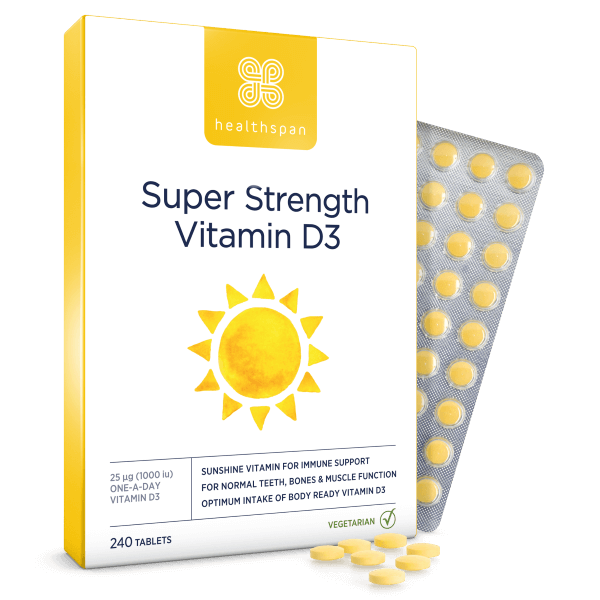
Super Strength Vitamin D3
For healthy bones, teeth, muscles and immunity
- 25mcg vitamin D per tablet
- Helps keep bones, teeth and muscles healthy, and supports immunity
- Multiple health benefits from €0.06 a day