











Nutritionist Rob Hobson answers the important questions about this vital, but over-consumed, nutrient.
Salt, or sodium chloride to give it its scientific name, is used as a flavour enhancer and food preservative. While salt gets a bad rap, it's actually a vital nutrient for the body and is the main source of sodium and chloride ions in the diet.
Why is salt important?
Sodium is important for the regulation of fluids in the body, is essential for nerve and muscle function and, along with chloride ions, is involved in controlling blood pressure and volume. Chloride, meanwhile, is an important part of stomach acid.
What happens if you eat too much salt?
Although we've established that salt is vital for the human body, we all know that too much is bad for us. This is because an excess of sodium causes the body to hold extra water, putting pressure on blood vessels and causing hypertension (high blood pressure).
High blood pressure is often referred to as the 'silent killer', as it comes with few noticeable symptoms and is a risk factor for stroke, heart disease, kidney disease and vascular dementia.

Too much salt causes the body to hold on to water, leading to high blood pressure and the possibility of stroke or heart disease.
How much salt do we eat in Ireland and how much do we need?
The recommended daily intake in Ireland is no more than 4g of salt, equating to around 1.6g of sodium. However, the salt we add to our food is not the biggest contributor to our intake, it's the sodium found in bread, processed meat and other convenience foods that contribute to our over-consumption.
Is it true that you need more salt when you exercise?
Sodium is an electrolyte, which helps the body to maintain fluid balance and it is lost through sweat. While the marketing of sports drinks would have us believe we need to replace sodium when working out, this is not necessary if you only hit the gym a few times a week, as it's likely you are getting enough salt in your diet to start with.
Sodium is more important for athletes engaged in endurance sports, as they can easily become dehydrated during events which can last more than two hours.
Are sea salt or the various coloured varieties better for you?
Sea salt is sourced through evaporation of seawater or saltwater lakes, and involves very little processing. Therefore it is often viewed as a more natural option compared to table salt, which is manufactured with caking agents to allow it to flow more freely.
Pink Himalayan salt is a type of rock salt which is mined in the Punjab region of Pakistan near the Himalayas, while the black variety is commonly used in South Asia and is manufactured in the same region as pink salt (this process gives it a distinctive sulphurous pungent smell).
These darker coloured salts are often seen as being healthier because they contain a greater concentration of trace minerals such as iron, potassium, magnesium and zinc. However, you can't rely on them as a useful source of these minerals, given that we need to limit our salt intake.
The bottom line: salt is salt, no matter what colour it is or where it comes from.
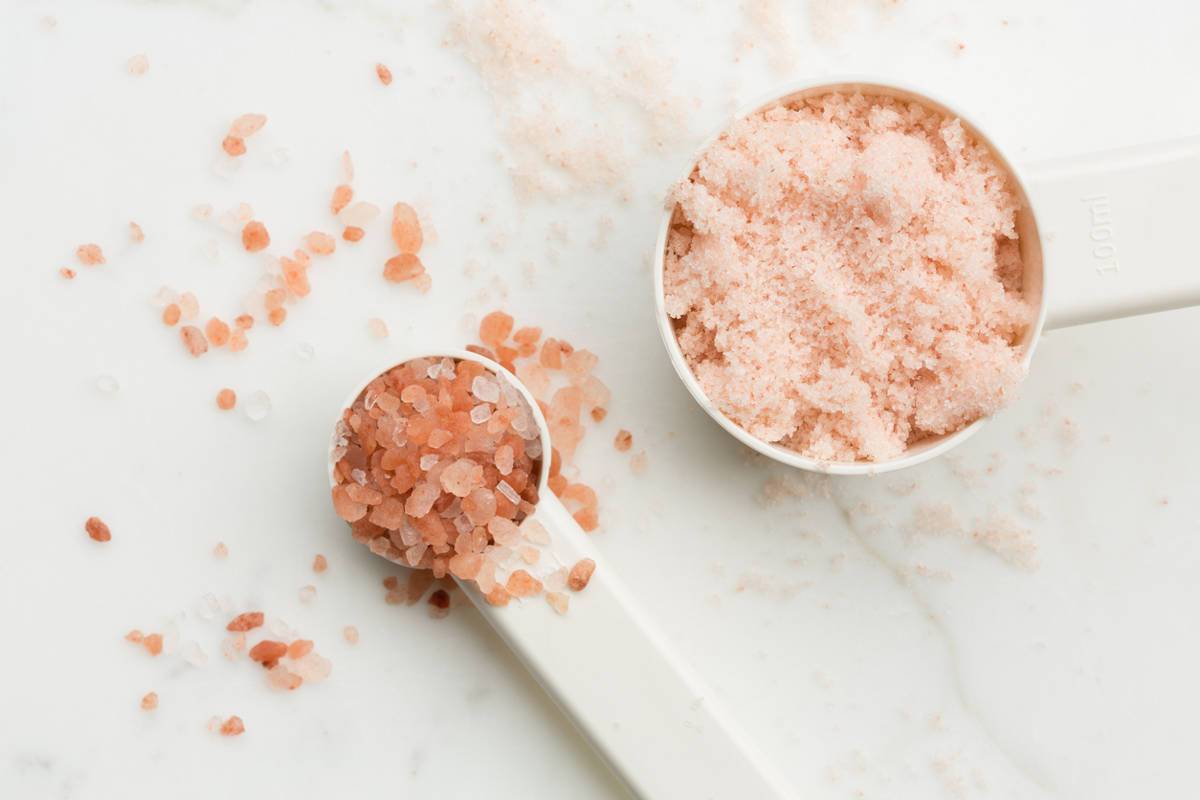
Pink Himalayan salt has a high concentration of important trace minerals, but too much still causes the same problems as normal table salt.
Why do some countries use iodised salt?
Many countries around the globe add iodine to their table salt to help prevent iodine deficiency in their populations, which can lead to thyroid issues and poor mental development in unborn babies.
Iodine is not added to salt in Ireland, but iodine should be a consideration for pregnant women, especially teenage girls.
How can you cut back on the amount of salt you eat?
It's easy to become accustomed to the salty taste of food, but it doesn't take long for your body to adjust and become more sensitive to taste once you restrict your intake. A good place to start is by checking the label on the foods you buy and opting for those with an amber or green traffic light colour for salt. Ditching processed foods, especially meat products, will also help you to reduce your intake, as will no longer adding salt to cooking water.
Try to include more herbs and spices in your cooking in place of salt. Using ingredients such as tomatoes, tomato purée, mushrooms, seafood, seaweed and strong cheeses (these are high in salt, but a small amount can go a long way) can add umami – that more-ish, savoury taste.
While salt is an important source of the sodium that is needed in our diet, most of us consume too much and should focus on cutting back to help protect our health. It's worth remembering that every variety of salt, no matter its source or colour, does the same thing, and no salt can be considered a health food.